Little Big League (Retro)

by Edward Dunn


LITTLE BIG LEAGUE (1994) PG 119 Minutes Director: Andrew Scheinman Writers: Gregory K. Pincus, Adam Scheinman Luke Edwards, Timothy Busfield, John Ashton
CAST Luke Edwards…Billy Heywood Timothy Busfield…Lou Collins John Ashton…Mac Macnally Ashley Crow…Jenny Heywood Kevin Dunn…Arthur Goslin Jason Robards…Thomas Heywood Billy L. Sullivan…Chuck Miles Feulner…Joey Jonathan Silverman…Jim Bowers Dennis Farina…George O'Farrell Wolfgang Bodison…Spencer Hamilton Duane Davis…Jerry Johnson Leon Durham…Leon Alexander Kevin Elster…Pat Corning Joseph Latimore…Lonnie Ritter Bradley Jay Lesley…John "Blackout" Gatling John Minch…Mark Hodges Michael Papajohn…Tucker Kain Scott Patterson…Mike McGrevey Troy Startoni…Larry Hilbert Antonio Lewis Todd…Mickey Scales

ROOKIE OF THE YEAR is about a child allowed to play adult. LITTLE BIG LEAGUE is about a child forced to become one.

The distinction matters more than it first appears. Henry Rowengartner's fastball is a fluke, a loophole, a summer-long suspension of the rules that govern who gets to stand on a major league mound. Nothing is asked of him beyond showing up and throwing. Billy Heywood's inheritance comes with no such suspension. When Thomas Heywood dies and leaves the Minnesota Twins to his twelve-year-old grandson, the film doesn't hand Billy a fantasy — it hands him a job. Roster decisions, trade negotiations, a clubhouse full of grown men who outweigh him by a hundred pounds and have every reason to resent taking instruction from a kid. Henry gets to play. Billy has to manage.

It's worth sitting with how strange the premise is once you look past its high-concept pitch. Thomas Heywood would have understood, better than almost anyone, what running a baseball team requires — the meetings, the travel, the late nights, the toll. He hands all of it to Billy anyway, with no transition period and no safety net beyond Mac Macnally and a general manager who isn't sure whether to take orders from a child. It is a premise that collapses under literal scrutiny, yet the film still invites questions its fantasy framework cannot entirely contain. The fact that those questions are worth asking is what makes LITTLE BIG LEAGUE more interesting than ROOKIE OF THE YEAR ever needed to be.

Billy has already lost his father before the story begins, and the film is reluctant to dwell on it. Thomas Heywood's death isn't the first hole in this family, it's the second. By the time Billy inherits a baseball team, he has already absorbed the loss that's supposed to be the rarer, harder one for a child to survive — and the film asks him to do it again, in public, with a payroll attached. Billy says as much himself, early on, almost in passing: he'd rather have his grandfather. Not the team. Not the job. His grandfather.

It would be easy to call Billy mature, and the film occasionally settles for that word itself. But maturity isn't quite what's on screen. Maturity can be performed — a kid playing at being older, borrowing the postures of adulthood without believing in them. Billy isn't doing an impression of competence. He simply means everything he says, with a directness that has nothing to do with age. Watching his grandfather's will on video, Billy hears the lawyer prompt him toward the obvious response — isn't it wonderful, his grandfather gave him the Twins — and doesn't take it. He'd rather have his grandfather. The room is full of adults — his mother, a lawyer, Arthur Goslin — and the easy answer was sitting right there for him to pick up. He's telling the truth, the way children do before they learn that adults usually want something gentler. That quality — sincerity, not maturity — is what makes the rest of the film's premise bearable to watch instead of merely strange.

LITTLE BIG LEAGUE is unusually direct about what it thinks adulthood is. When O'Farrell refuses to use a player Billy and Arthur both rate higher, Arthur tells him, with all due respect, that he's acting like a first grader — and he isn't wrong. O'Farrell's response is to mock Billy for playing in the owner's box with his "little buddies" and suggest he go home and build a fort, the age insult as a last resort from a man who's been told he's the one behaving like a child. He's fired within the same scene. The resistance within the clubhouse isn't much better at first — a grown man taking instruction from a sixth-grader is, fairly enough, a hard thing to swallow — but the film repeatedly lets that resentment curdle into something closer to tantrum than principle. Mac Macnally and Lou Collins are the exceptions, and they're exceptions for a specific reason: they're the only adults in the film who respond to Billy as if his age and his sincerity are two different facts, worth treating separately. Everyone else conflates them, and in doing so makes themselves look smaller than the boy they're refusing to take seriously.

There's a small, specific pleasure in watching this movie as someone who grew up rooting for the team on the other side of the ball. Late in the film, Lou Collins gets all of a Randy Johnson pitch and sends it toward the stands — and Griffey takes it away at the wall before it can leave the yard. I remember watching that scene for the first time, younger than Billy is in this movie, and feeling no suspense at all. Of course Griffey caught it. That's what Griffey did. The film isn't asking me to believe something about its fictional world; it's just confirming something I already knew about the real one.

For all the responsibilities the film places on Billy, it never mistakes him for a child genius. Half the Twins roster ends up crowded around a chalkboard, trying to solve a math word problem from Billy's own homework: if Joe can paint a house in three hours and Sam can do it in five, how long would it take them together? They get nowhere until Jim Bowers produces the answer. Billy, fluent in trade value and bullpen management and reading a pitcher's mechanics the way other kids read comic books, has nothing to add to his own assignment. He is not a genius. He is a baseball savant, and the difference matters — his gift has a shape, and that shape happens to be exactly what a baseball team needs from him and nothing else.

That narrowness is its own kind of warning sign. The friendships survive, but they no longer occupy the center of Billy's life. Baseball does. The job is technically optional — Mac would run things, Arthur would run things, the team would survive a season without a twelve-year-old owner attending every game — but managing wasn't even part of what Billy inherited. He takes it on himself, and the film never seriously asks whether he should have. He can handle the job. That's not the same as belonging in it, and the film is more honest about the difference than its premise has any right to be.

Jason Robards appears in LITTLE BIG LEAGUE just long enough to haunt the rest of it. Thomas Heywood gets a handful of scenes before the video will makes his death official, and the film doesn't ask Robards to do much in them beyond be warm, be wise, and be gone. That's enough. Robards has the kind of presence that doesn't need screen time to accumulate weight — he carries the authority of a man who makes the bequest feel emotionally plausible, even when the logistics remain absurd. Every adult who fails Billy afterward, every player who resents him, every ounce of resentment Billy has to absorb without complaint, traces back to a grandfather who survives only as a video recording. Robards isn't in the movie to dominate it. He's there so that his absence has a face.

That's the case for the movie. The case against it is shorter, but harder to ignore.

The film knows what baseball mythology sounds like. Billy says as much himself, in a speech to his own players about playing in the same outfield as DiMaggio and Mantle, stepping into the batter's box where Ted Williams once stood — Fenway and Yankee Stadium invoked by name, treated as something closer to sacred ground than real estate. It's a good speech. The trouble is what the film does with the real thing once it gets there. Billy's own trip to Fenway amounts to him asleep through most of it — the one park in the movie steeped in exactly the history he finished describing moments earlier, and he isn't awake to see it. The Metrodome, where the bulk of the movie lives, is the opposite kind of problem: a controlled, artificially lit interior that never once looks like the cathedral Billy describes in his own dialogue. Comiskey Park gets closer — one of the few moments in the film where baseball feels like a place rather than an environment — but it's a brief exception in a movie that otherwise keeps choosing the version of the sport with the natural light switched off, even as its dialogue keeps reaching for something grander.

The performances tell a similar story. Luke Edwards is convincing exactly where the film needs him to be — on a mound, in a dugout, reading a clubhouse — and noticeably less so in the scenes that ask him to carry ordinary adolescence, as though the role only fully fits him when there's a baseball in the frame. The supporting cast often compensates, except where the film leaves the most obvious opportunity sitting on the table. Lou Piniella, playing a version of himself, is given almost nothing to do with his own reputation; a manager known for kicking bases and screaming his way through arguments shows up oddly restrained here, and the film never cashes in on the obvious joke sitting right there in his casting. The comedy elsewhere is similarly uneven, landing more often in the margins — Billy's friends get sharper lines than the plot does — than in the scenes the film is clearly building toward. None of this would matter much at ninety minutes. At nearly two hours, a film this thin on plot starts to feel its length, stretching a premise that was always better suited to a tight, economical run at the idea.

The film has its real ending sitting right there in the locker room, and chooses not to use it. Billy tells the team he's retiring — not from ownership, just from the job of running them day to day — and gives them the only reason that's mattered for two hours: he wants to go fishing, he wants to play Little League, he wants to be a kid again before the option disappears. It's the quietest scene in the movie and the only one that fully earns everything this review has spent its time building. Then the film immediately gets nervous about it. Billy walks back outside to find the crowd still waiting for him, and LITTLE BIG LEAGUE closes not on a boy deciding to put the job down, but on a boy walking back into the spotlight one more time, to applause, with triumphant music swelling underneath. The movie wrote the ending it needed. It just didn't trust it enough to let it be the last thing we see.

Final Verdict: 67 out of 100

Sidenote:

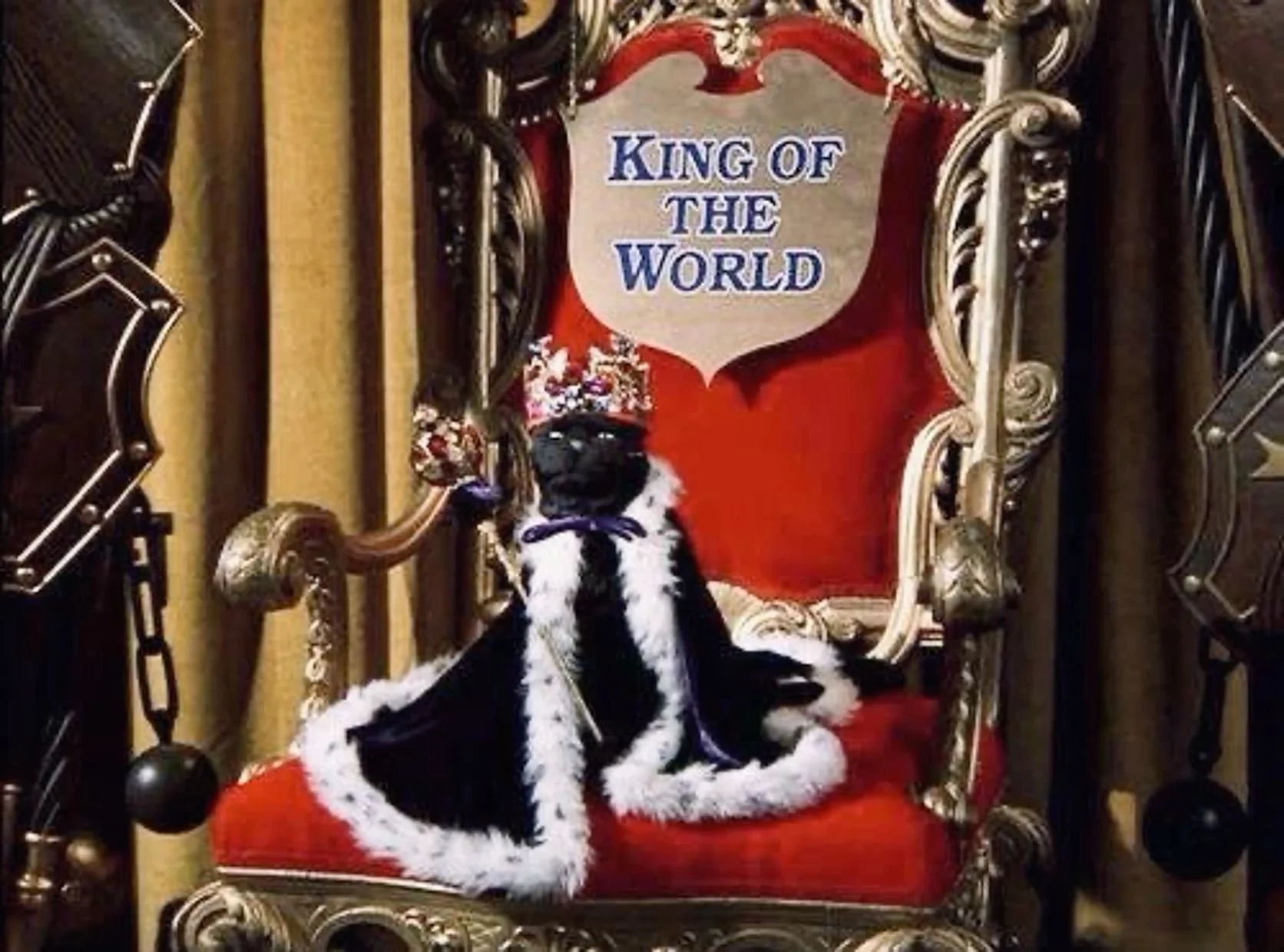
Little Big League review image

Rookie of the Year (Retro)

by Edward Dunn


ROOKIE OF THE YEAR (1993) PG 103 Minutes Director: Daniel Stern Writer: Sam Harper Thomas Ian Nicholas, Gary Busey, Albert Hall
CAST Thomas Ian Nicholas…Henry Rowengartner Gary Busey…Chet Steadman Albert Hall…Sal Martinella Amy Morton…Mary Rowengartner Dan Hedaya…Larry "Fish" Fisher Bruce Altman…Jack Bradfield Eddie Bracken…Bob Carson Robert Hy Gorman…Clark Patrick LaBrecque…George Daniel Stern…Brickma Colombe Jacobsen-Derstine…Becky John Candy…Cliff Murdoch, Announcer

It's July of 1993, you've already seen JURASSIC PARK six times, and FREE WILLY doesn't come out for another week. What are you going to do, play actual baseball? Don't be silly.

The Cubs had a strange built-in familiarity for me. When I lived in Idaho, Cubs games were often the only baseball on television, which makes them my third-favorite team almost by default, behind the Mariners and Yankees. Wrigley Field already felt like somewhere I had been watching from a distance.

ROOKIE OF THE YEAR knows what it is and doesn't apologize for it. The premise — twelve-year-old breaks his arm, tendons heal too tight, throws a hundred miles an hour, gets signed by the Chicago Cubs — is the kind of logic that only works if you don't look directly at it. The film knows this and keeps moving. Thomas Ian Nicholas plays Henry without a trace of cynicism, which turns out to be exactly the right call. The movie works because Henry accepts the impossible circumstances long before the audience does. While the adults argue and cash in, Henry mostly just wants to pitch for the Cubs.

ROOKIE OF THE YEAR gets Chet Steadman right. Gary Busey plays him as a man who has spent decades in his own body and knows exactly what it can and can't do anymore. He doesn't perform the veteran — he just stands in a dugout the way someone stands in a dugout when they've been standing in dugouts their whole life. When Steadman tells Henry to deal from his have-to, it's the kind of advice that sounds like nonsense and lands like wisdom, partly because Busey delivers it like a man who isn't sure it makes sense either. The shoulder that won't come back, the ring he's spent his career chasing, the kid he didn't ask to mentor — Busey carries all of it, and lets you do the noticing.

Then there is Daniel Stern. Stern directs the film and casts himself as Brickma, the pitching coach, a decision that often tests the movie's sense of proportion. Brickma exists as comic relief, which is a legitimate function. The problem is how Stern plays him. He finds small spaces and fills them completely — chewing tobacco, physical bits, enthusiasm that has nowhere to go. Watching him work, you get the sense of a director who trusted himself on screen more than the material warranted. Busey is giving you a man. Stern is giving you a performance.

ROOKIE OF THE YEAR is best understood not as a baseball movie with one impossible premise, but as a childhood fantasy that refuses to stop and answer adult questions. Every kid who watched this in 1993 understood the appeal immediately — not just playing baseball for the Cubs, but being signed, profiled, interviewed, and treated as someone whose decisions mattered. It moves the way a twelve-year-old dream moves: skipping the paperwork, ignoring the logistics, and rushing toward the part where the kid gets the uniform, the crowd, and the mound. What's interesting is how consistently the adult world keeps intruding anyway. Jack Bradfield has to be shown the door. Steadman's shoulder gives out at the worst possible moment. The adults start negotiating Henry's future long before Henry is asked what he wants from it. The film sells a childhood dream so pure it has to keep swatting away the adult consequences of that dream, and it mostly succeeds, right up until it has to explain how the Cubs won the World Series without their twelve-year-old pitcher or their veteran ace.

Bruce Altman plays Jack Bradfield with the energy of a man who has been waiting his whole life for an angle this good. He arrives driving a Miata, which tells you everything — this is someone who thinks he's more successful than he actually is. Bradfield attaches himself to Henry's mother first, then to Henry, in that order, which is also telling. He's not a villain so much as an opportunist who keeps mistaking his own enthusiasm for competence. The film handles him efficiently: he tries to ship Henry off to the Yankees behind everyone's back, gets exposed, and is physically thrown out of the house by a woman who has finally had enough. It's a satisfying exit. What makes Bradfield work as a character is that nothing he does is surprising once you have seen the car. The film just lets him run until he runs out of room.

The film's emotional architecture is a father triangle, and it's more coherent than the rest of the screenplay deserves. Henry's real father left before he was born, a fact he kept to himself for years because he understood what the gentler story gave his mother. Jack Bradfield arrives as a false substitute — attentive enough to fool everyone briefly, corrupt enough to make the vacancy look preferable. Chet Steadman fills the vacancy without applying for it. He doesn't adopt Henry so much as end up standing next to him, offering the kind of low-key guidance that doesn't announce itself as guidance. By the final scene, Steadman is coaching Henry's little league team, which is the film's shorthand for Steadman and Mary being a couple now. The film earns it, and tellingly, Stern stays behind the camera.

Henry Rowengartner is not a cool kid, and the film is smart enough to know that's an asset. Thomas Ian Nicholas plays him without the precocious self-awareness that sinks most child performances in this genre — Henry doesn't know he's charming, which is the only way charm works at twelve. What's strange about him is how well he understands the adult world without being hardened by it. He has known since second grade that his father left before he was born, kept the knowledge to himself, and still managed to remain recognizably a kid. He mugs for the crowd when he's nervous, argues with his friends about a boat, and asks Steadman for an autograph on his first day in the clubhouse. There is something almost structural about this. ROOKIE OF THE YEAR is a movie about a child navigating an adult world, which is also a reasonable description of what a child actor does for a living. Nicholas handles both with surprising ease.

John Candy only appears briefly as Cubs announcer Cliff Murdoch, but his presence does more work than his brief appearance should allow. As an honorary Chicagoan through his association with John Hughes films, Candy feels right at home at Wrigley Field. More importantly, he makes the movie feel like it belongs in Chicago, even when it occasionally drifts into fever-dream territory. I'd probably knock ten points off my final verdict if someone else had been cast in the role. Twenty points if that someone was Tom Arnold. That's partly a joke, but only partly. For a few scenes, the film is asking someone to fill the shoes of Harry Caray, and Candy is one of the few actors who can make that feel effortless.

The soundtrack does its best to stay out of the way and mostly succeeds by accident. The licensed tracks lean toward the aggressively generic — the kind of music that says "upbeat studio family movie" before it says anything about Henry, Chicago, or baseball. Mike and the Mechanics' "Get Up" is a representative offender — optimistic, forgettable, the kind of song that could soundtrack a car commercial as easily as a baseball movie. The score underneath it fares better, functional and unobtrusive in the way a good sports movie score should be. What holds the whole thing together visually is the cinematography. Henry's world feels large in a way that isn't accidental — wide shots that make Wrigley Field genuinely enormous, that put a twelve-year-old on a mound and let the scale do the emotional work. The movie remembers what places look like when you're twelve. Stadiums feel impossible. Adults seem taller. The future feels farther away. It's one of those cases where being shot on film helps. The texture earns the fantasy.

ROOKIE OF THE YEAR ends where it should. The arm is gone, the season is over, and Chet Steadman is coaching Henry's little league team in a way that doesn't require explanation. The childhood fantasy has run its course and returned Henry more or less to where he started, except that he has a surrogate father now and the Cubs have a World Series ring the film can't fully account for. That gap between what the movie earns and what it claims is the most honest thing about it. Daniel Stern made a film with genuine instincts and then kept interrupting them. What survives the interruptions — Busey's restraint, Altman's slithering opportunism, Nicholas's uncomplicated decency — is enough to make ROOKIE OF THE YEAR worth your time, provided you are willing to meet it at the frequency it's broadcasting on. It is not a great movie. It is a very good version of the dream a twelve-year-old would have had in the summer of 1993, which turns out to be almost the same thing.

Final Verdict: 64 out of 100

Sidenote: Yes, I will be reviewing LITTLE BIG LEAGUE and ANGELS IN THE OUTFIELD next. At this point, backing out would only make the trilogy incomplete.


The Dead (Retro)

by Edward Dunn


THE DEAD (1987) PG 83 Minutes Director: John Huston Writer: Tony Huston Anjelica Huston, Donal McCann, Dan O'Herlihy
CAST Anjelica Huston…Gretta Conroy Donal McCann…Gabriel Conroy Dan O'Herlihy…Mr. Browne Helena Carroll…Aunt Kate Morkan Cathleen Delany…Aunt Julia Morkan Donal Donnelly…Freddy Malins Ingrid Craigie…Mary Jane Morkan Rachael Dowling…Lily Marie Kean…Mrs. Malins Frank Patterson…Bartell D'Arcy Colm Meaney…Mr. Bergin Marie McDermottroe…Molly Ivors

Ask someone to describe an Irish party and you'll likely hear stories of loud music, flowing drinks, and celebrations that stretch well into the night. Think of the steerage party from TITANIC, where Jack and Rose dance to a fiddle tune while beer sloshes across the tables. The gathering at the center of THE DEAD has many of those same ingredients. Hosted by two elderly sisters on the Feast of the Epiphany, the evening unfolds through piano recitals, formal dinner speeches, old songs, and conversations that drift between politics, family history, and half-forgotten memories. There is dancing. There is drinking. Yet by the time the last guest heads home, they'll probably awaken to a different kind of hangover.

Gabriel is a caring, intelligent man who seems incapable of receiving love. Before the party, he fusses over Gretta with the galoshes he has thoughtfully brought for her, worrying that she might catch cold on the snowy walk home. When he sees Gretta standing alone on the staircase listening to a song, he does not ask what has captured her attention. Instead, he turns the moment into a work of art, imagining a painting he would call DISTANT MUSIC. Earlier in the evening, after awkwardly offending Lily, he presses a coin into her hand and heads for the stairs before she can refuse it. Again and again, Gabriel reaches for people, but only after first transforming them into a problem to solve, a picture to admire, or a feeling to arrange.

Beneath the music, dancing, and polite conversation, nearly every aspect of the evening feels carefully maintained. When Mary Jane is called upon to play for the guests, a flicker of annoyance crosses her face before she replaces it with a polite smile and heads for the piano. It is a tiny moment, but it captures the unspoken bargain holding the party together: personal feelings are acknowledged briefly, then set aside for the sake of the occasion. Once you notice the absence of children, you cannot stop noticing it. What remains is a gathering almost entirely preoccupied with the past, where conversation drifts toward old singers, faded traditions, and faces that are no longer there.

What Gretta tells Gabriel is moving, but it is also impossible to verify. Michael Furey emerges from her account less as a person than as a memory preserved in amber. When Gabriel suggests the boy may have caught his death standing in the rain, Gretta rejects the explanation outright, insisting that he died for her. Yet her own recollections tell a different story, pointing toward a young man whose health was already failing. Her remark that he studied singing for the sake of his lungs carries the weight of an obituary. Over the years, the uncertainties of a teenage romance have given way to a cleaner and more dramatic story, one in which Michael's illness, devotion, and death become inseparable. Gabriel is not simply encountering a lost love. He is encountering the way memory elevates certain people into legends and places us at the center of them.

In the hotel room, all of the evening's careful arrangements finally give way. While Gretta has been lost in memories he cannot see, Gabriel has been mentally constructing an entirely different evening for the two of them, one that ends not in revelation but in romance. As Gretta recounts the story, Gabriel finds himself staring into a mirror. For the first time all evening, he seems unable to arrange what he is seeing into a speech, a painting, or a romantic fantasy. He can only stand there and absorb it.

For most of the evening, Gabriel has been converting feelings into speeches, gestures, and carefully composed images. There, he finally encounters something that resists all three. Whether Michael Furey deserves the place he occupies in Gretta's memory is almost beside the point. Gabriel is confronted with an emotion that neither belongs to him nor can be organized around him. What he does with that realization, if anything, is a question the film leaves unanswered.

The famous snowfall that closes THE DEAD is often interpreted as a symbol of death, but what struck me was how little it discriminates. The snow falls on everything equally: the hotel where Gabriel lies awake, the Dublin streets he has just traveled, and the graveyard where Michael Furey rests. It dissolves the distinction Gabriel has spent the evening trying to maintain between the living and the dead. Earlier, his speech celebrated those still gathered in the room. By the end, he seems to understand that the absent possess their own claims. The snow drifts westward toward Galway and Oughterard, toward the world he has been resisting all evening, and for the first time he stops resisting it.

Joyce ends the story inside Gabriel's thoughts. Huston makes the unusual decision to preserve much of that interior monologue as voiceover. There is no perfect way to translate pages of interior reflection into film, and Huston resists the temptation to invent a visual equivalent for something Joyce already expressed with remarkable precision. Instead, he trusts the words and trusts Donal McCann to deliver them. McCann does so with the same restraint he brings to the rest of the performance, allowing the thoughts to arrive without announcing themselves. The circumstances of the production make that trust harder to dismiss. By the time filming began, Huston was directing from a wheelchair, tethered to an oxygen tank and too ill to travel to Ireland. The Dublin interiors were recreated in a California warehouse, the snow was plastic, and the entire production unfolded under the shadow of an ending everyone could see coming. Four months later, Huston was gone. There is something fitting about a dying filmmaker trusting Joyce's words on mortality enough to simply let them be heard.

THE DEAD ends where many films begin: with a man realizing that the world is larger and stranger than the story he has been telling himself. Throughout the evening, Gabriel tries to shape experience into something orderly and comprehensible. In the hotel room, that habit finally fails him. Whether the revelation he receives is profound truth, romantic mythology, or simply the way memory and feeling refuse to be separated is left unresolved. The film is content to leave him there, awake in the dark, confronted by something he cannot fully explain. I admired THE DEAD more than I loved it, but that lingering uncertainty may be exactly what the film has to offer.

Final Verdict: 86 out of 100.


Angus (Retro)

by Edward Dunn


ANGUS (1995) PG-13 90 Minutes Director: Patrick Read Johnson Writer: Jill Gordon Charlie Talbert, Kathy Bates, George C. Scott
CAST Charlie Talbert…Angus Bethune Kathy Bates…Meg Bethune George C. Scott…Grandpa Ivan Bethune Ariana Richards…Melissa Lefevre Chris Owen…Troy Wedberg James Van Der Beek…Rick Sanford Rita Moreno…Madame Rulenska Anna Thomson…April Thomas Lawrence Pressman…Principal Metcalf Robert Curtis Brown…Alexander Kevin Connolly…Andy Wesley Mann…Mr. Kessler

A lot of us just have to settle for being good looking. Angus Bethune's problem is that he gets everything else. He's smart, athletic, funny, articulate, and played by Charlie Talbert with enough natural charm that the movie's failures land somewhere other than on him. What Chris Crutcher understood in A Brief Moment in the Life of Angus Bethune is that none of that matters when a community decides what category you belong in. What Jill Gordon understood when adapting it for the screen is less certain. ANGUS inherits the architecture of Crutcher's story almost intact, then quietly removes one of its load-bearing walls. The gay parents are gone. The Alexander speech is reassigned. A story about multiple forms of otherness becomes a story about a single visible one. The result isn't a bad movie. It is, however, a different argument than the one it started from.

The change runs deeper than the parents themselves. In Crutcher's story, Angus's family isn't presented as a social issue or a lesson. It's simply the fact around which his life has been organized. He worries about being fat. He worries about dancing. He worries about Melissa Lefevre. The jokes about his parents arrive with everything else, part of the daily weather he has learned to live under. The most important conversation in the story is about courage. On the night of the dance, Angus's stepfather Alexander tells him Superman isn't brave because Superman is indestructible. Brave people are the ones who can be crushed and go anyway. Gordon keeps the idea but moves it to Grandpa Ivan, turning a private conversation between two men navigating difference into a more familiar passing of wisdom from grandfather to grandson. It's an understandable change. It's also a revealing one.

Once Gordon commits to opening the story up, the additions arrive quickly. Crutcher's original is a single sustained interior monologue unfolding over the course of one evening. The movie backs up a few months and begins constructing causes. Angus gets a best friend. He gets a science competition. He gets football games, a grandfather's wedding, and a social ecosystem large enough to sustain a feature film. Some of it works. The problem isn't expansion itself. Adaptation requires expansion. The problem is that every addition pulls the story farther from the thing that made it distinctive in the first place: a kid sitting alone with his fears on the night they matter most. The film keeps searching for explanations when the story was content to present a condition.

The funny thing is that some of the material Gordon invents acquires a gravity the screenplay never quite earns. George C. Scott's Ivan Bethune doesn't exist in Crutcher's story, and once he's on screen it's difficult to imagine the movie without him. Scott had spent decades playing men who could intimidate a room by walking into it. Here he spends most of the film dispensing dubious advice, taking pills, and getting married. The performance carries an awareness of mortality the screenplay never has to articulate. When Ivan dies before the ceremony begins, the scene lands not because the movie has earned a devastating tragedy but because Scott brings one with him. Gordon may have replaced a private conversation between Angus and Alexander with a more familiar grandfather-grandson dynamic, but she also cast George C. Scott. Adaptation is full of trades like that.

The same thing happens with Charlie Talbert and Kathy Bates, neither of whom seem particularly interested in the movie's shortcuts. Talbert has the hardest job in the cast because he has to persuade us that Angus is both wounded by the world's opinion of him and capable of surviving it. Push too hard in either direction and the character collapses into self-pity or fantasy. Talbert finds a narrow lane between them. Whatever problems ANGUS has, they are not his. Bates, meanwhile, refuses to play shorthand. The screenplay gives her a truck driver's wardrobe, a few maternal speeches, and a CB handle of Bruiser. Bates finds the parent underneath the shorthand. By this point a pattern begins to emerge. Gordon keeps simplifying the architecture while the actors keep putting the missing weight back in.

Anna Thomson has even less to work with. April Thomas enters late, comes close to marrying Ivan, and is asked to carry a grief the movie barely stops to examine. In a screenplay that tends to underline its emotional points, Thomson's best moment arrives almost by accident. There is no speech about lost love, no scene constructed around mourning. She simply looks like a woman whose future has been abruptly revised. The wedding exists largely to give Angus one last lesson from his grandfather. Thomson makes sure we notice it was somebody else's wedding too. It's a small performance, but it belongs to the handful of moments where ANGUS stops treating supporting characters as functions and starts treating them as people.

The movie's understanding of high school is less persuasive. James Van Der Beek was nineteen during filming, which is hardly a crime in a genre built on twenty-five-year-old sophomores, but Rick Sanford arrives on screen as a fully operational apex predator. He is a freshman carrying himself like a veteran politician. The letterman jacket is already earned despite Rick being a freshman on the junior varsity squad. The social hierarchy is already established. By the time he orchestrates the flagpole humiliation, he feels less like a fourteen-year-old boy than an inherited idea from an earlier generation of teen movies. ANGUS was released in 1995, but Rick's worldview belongs to the Reagan era. He isn't a person so much as a social function: the bully required to make the rest of the story work.

What makes Rick feel dated isn't that bullies never existed. They did. Cliques were real too. The problem is that the movie's categories are so rigid. My own high school experience was messier than that. One morning after I missed the bus, the captain of the football team pulled over in his car and offered me a ride to school. We knew each other from English class. That was the extent of it. On the way there, I overheard him talking to his mother on his cell phone and remember thinking how little I actually knew about him. For years he had existed in my head as a type. Then, for ten minutes, he became a person. That's the step ANGUS never quite takes with Rick. The movie understands what it feels like to be judged from the outside. It is less interested in the inner lives of the people doing the judging.

The movie's treatment of Troy is more frustrating because it briefly finds a better story and then backs away from it...

Final Verdict: 62 out of 100


The Straight Story (Retro)

by Edward Dunn


THE STRAIGHT STORY (1999) G 112 Minutes Director: David Lynch Writers: John E. Roach, Mary Sweeney Richard Farnsworth, Sissy Spacek, Harry Dean Stanton
CAST Richard Farnsworth…Alvin Straight Sissy Spacek…Rose Straight Harry Dean Stanton…Lyle Straight Everett McGill…Tom Wiley Harker…Bud Joseph A. Carpenter…Priest Donald Wiegert…Sig Tracey Maloney…Ratliff Girl Barbara June Patterson…Dorothy Dan Flannery…Danny Riordan

I first came across THE STRAIGHT STORY through a clip of Norm MacDonald talking about Richard Farnsworth. Farnsworth had been riddled with cancer during the shoot — a fact he kept from most people, including parts of his own family. When he was done, he did what Norm called "a stuntman's death." He had been nominated for an Academy Award for the role, and Norm's point was simple: if he had announced the cancer, he would have won for sure. He didn't announce it. Nothing advertises its own importance in THE STRAIGHT STORY — not Farnsworth's performance, not David Lynch's direction, not even the premise of an old man crossing Iowa and Wisconsin on a riding lawnmower to reconcile with his estranged brother. The movie simply starts the engine.

I hadn't seen it. I wanted to.

The story is true. In 1994, 73-year-old Alvin Straight learned his estranged brother had suffered a stroke. Unable to drive a car, he hitched a small trailer to his John Deere riding lawnmower and made the journey to Wisconsin. It took six weeks. I initially assumed this was the kind of "true story" that gets softened and sweetened for the screen. It isn't. Lynch takes the story at face value. There is no speech explaining why the lawnmower had to be the vehicle. Alvin just goes.

In 1999, a David Lynch film carried expectations shaped by BLUE VELVET, WILD AT HEART, and LOST HIGHWAY. Audiences were trained to look for the rot beneath the pleasant surface. A G-rated Lynch movie felt like either a reassuring anomaly or a very specific kind of trap. THE STRAIGHT STORY is neither. The Lynch undertow remains — in Angelo Badalamenti's score, in the way small towns feel slightly weighted, in conversations that tilt a degree or two sideways — but the darkness isn't hidden evil in people. It lives in time, age, distance, memory, and the night sky. Here, charm and creepiness are the same thing.

What holds the film together is that Lynch doesn't rank his material. It opens on a shot of stars and closes on the same shot. In between, Lynch gives identical weight to the cosmic and the mundane: the night sky and an argument over a grabber at Ace Hardware, a woman unraveling over the number of deer she has hit, a mower breaking down on a hill, two estranged brothers sitting together after years of silence. None of it is treated as more or less important than anything else. The stars, the wheat fields, the roadside encounters, the failing machinery — they all belong to the same fabric. Alvin doesn't move across this world so much as within it. The lawnmower makes that possible. At five or ten miles an hour, you remain part of the landscape. You are reachable.

That pace becomes the film's philosophy. People talk to Alvin because he moves slowly enough to be talked to. A car puts glass and speed between you and the world; the mower does not. He meets a runaway girl, bickering twin mechanics, a fellow veteran — encounters a faster trip would have missed entirely. "It's an amazing thing what you can see while you're sittin'," he says over a beer. It feels less like folk wisdom than a simple report from the field. There is one moment where this pace is taken from him: a drive belt snaps on a hill and suddenly he is moving faster than he has moved in the entire film, completely against his will. It ends badly. The hill doesn't care about his philosophy. Lynch doesn't editorialize. He just shows you the hill.

Most films about old age subtly sell its virtues. THE STRAIGHT STORY refuses. Alvin offers observations the way a farmer reports the weather. When young cyclists ask what's good about getting old, he says he's seen enough life to separate the wheat from the chaff. Asked about the worst part, he answers without pause, without underlining: "The worst part of being old is rememberin' when you was young." No music swells. Lynch cuts away. The line lands because nothing is done with it — a description that also fits Richard Farnsworth's performance. At 79 and in real pain, he refused to perform his suffering, just as his character refuses to perform his wisdom.

THE STRAIGHT STORY doesn't stay heavy for long. A woman Alvin encounters on the road has hit so many deer that she's worked herself into a genuine existential crisis about it — the escalating body count delivered with complete exasperation, funny in a way where comedy and sadness stop being entirely separable. Shortly afterward, Alvin drives by with deer antlers mounted on the front of his trailer, and Lynch offers no comment. At an Ace Hardware, Alvin attempts to purchase a grabber from the shopkeeper — offers five dollars, gets a firm counter of ten, and eventually pays the ten with the resignation of a man who has decided exactly what a grabber is worth and knows he lost. Everett McGill, who Lynch fans will recognize from TWIN PEAKS in a completely different role, plays the John Deere dealer Alvin eventually does business with: solid, unhurried, trustworthy. Two straightforward men conducting straightforward business. And then there is Rose, played by Sissy Spacek, who arrives looking like a supporting character there to establish Alvin's domestic situation. Then Alvin, in conversation with a stranger, describes what she has lived through — and the picture that emerges stops the film cold. Lynch gives every character in this film the same patient attention he gives Alvin. No one is just scenery.

I came to the film with my own small experience. When I was four or five, my father drove our riding lawnmower to a family friend's house about a quarter mile away, crossing a fairly busy street to do it. My siblings and I thought it was the greatest thing we'd ever seen. The premise of THE STRAIGHT STORY never struck me as inherently absurd. There is a logic to lawnmower transportation in the right landscape, and Lynch understands it completely.

The film opens and closes under the stars not to emphasize human smallness against an indifferent universe, but because the stars belong to the same fabric as the wheat fields, the broken mower, the deer woman, and the distance between two brothers. When Alvin finally reaches Lyle (Harry Dean Stanton), the two men sit together with little need for words. This is where knowing that the Farley brothers — who play the bickering twin mechanics earlier in the film — had lost their own brother, Chris, becomes almost unbearable. Farnsworth and Stanton barely require dialogue. The distance has been crossed. The stars are still there.

THE STRAIGHT STORY is a film without villains, explanatory speeches, easy sentimentality, dramatic catharsis, or self-importance. Richard Farnsworth was refusing things too — the sympathy, the mythology, maybe even the Oscar Norm MacDonald was convinced he would have won. Lynch made a film that doesn't ask to be admired. Farnsworth gave a performance that doesn't ask to be admired. The straight story, it turns out, is the hardest one to tell.

Final Verdict: 94 out of 100


The Remains of the Day (Retro)

by Edward Dunn


THE REMAINS OF THE DAY (1993) PG 134 Minutes Director: James Ivory Writers: Kazuo Ishiguro, Ruth Prawer Jhabvala Anthony Hopkins, Emma Thompson, James Fox
CAST Anthony Hopkins…James Stevens Emma Thompson…Miss Kenton James Fox…Lord Darlington Christopher Reeve…Congressman Lewis Hugh Grant…Reginald Cardinal Peter Vaughan…William Stevens Ben Chaplin…Charlie, Head Footman Paula Jacobs…Mrs. Mortimer Patrick Godfrey…Spencer Michael Lonsdale…Dupont D'Ivry

There's a version of James Stevens that already exists on television. His name is Geoffrey Butler, he works for the Banks family in Bel-Air, and he spent six seasons making the same observations about the people he serves — the difference being that Geoffrey gets punchlines. He can see the absurdity of the arrangement, name it, weaponize it, and still carry the tray. He survives the job because he knows it's a job. Stevens, the head butler of Darlington Hall in THE REMAINS OF THE DAY, can do everything Geoffrey can — read a room, manage a household, stand so still he becomes furniture — but he can't do the one thing that would save him: laugh at it. For Geoffrey, service is a costume you put on and take off. For Stevens, it's the entire man. There's nothing underneath — or so he needs you to believe.

The way Hopkins plays Stevens, every sentence is a small act of disappearance. He doesn't say "I" when he can say "one." He doesn't say "me" when he can say "this house." When Miss Kenton says she might leave, the closest he gets to a personal response is "You mean a great deal to this house" — and he says it twice, in two different scenes, as if the building itself is doing the talking. When Congressman Lewis's man Spencer corners him with three questions about European politics — subjects Stevens has overheard debated in the dining room for years — he gives the same empty reply each time: "I'm sorry, sir, but I am unable to be of assistance in this matter." It's not that he's stupid. It's that having an answer would mean he exists as a person in the room and not just as part of the décor. Stevens doesn't suppress himself. He delegates himself — to the house, to Lord Darlington, to the role — until there's no first person left to speak in.

But Hopkins is too smart an actor to play Stevens as an empty suit. The film's best moments are the ones where the professional machinery stalls for half a second before catching up. Miss Kenton tells him she's been proposed to — "I am thinking about it" — and there's a flicker across his face that doesn't belong to any butler. It's gone before you can name it, replaced by "I see." Later the same evening, after she's told him she and her fiancé laugh at the way he pinches his nose when he puts pepper on his food, he manages "Does it, indeed?" and then something breaks. "Well, please... excuse me, Miss Kenton." He turns and walks away. Stevens doesn't leave rooms. He's dismissed from them, or he stays until he's no longer needed. Walking away mid-conversation, unprompted, with no professional excuse — for this man, that's a scream. The greatest scene, though, is the smallest. Miss Kenton finds him reading in his room and wants to see the book. He says it's "a book, Miss Kenton. A book." She keeps pressing, stepping closer, reaching for it. He claims he reads to develop his command of the English language. What he's holding is a sentimental love story — the one private admission he allows himself — and he'd rather lie about it than let her see it. She pursues, he retreats, the confession almost happens, and then it doesn't. The door closes. That scene is the entire film in ninety seconds.

The film builds a quiet inventory of what the role cost him. His father, William Stevens, worked as a butler for 54 years and ended up polishing doorknobs while the house worked around his decline. When Stevens has to deliver the news — the trays are getting dropped, the work is no longer coming easily — his father receives it with "I hope I will not disappoint you, sir." A father calling his son "sir." On his deathbed, the old man reaches for something personal: "I hope I've been a good father. I tried me best." Stevens goes back downstairs to serve port. He tells himself his father would have wanted him to carry on, and maybe he's right, but what he's also doing is watching the full arc of a life in service — decades of loyalty ending with a fall on the paving stones — and choosing not to read it as a warning. The father had a wife. Had a son. Had a distinguished career. And still ended up diminished and dying in an upstairs room while the house carried on without him. Stevens is heading toward the same destination with less.

Then the conscience goes. Lord Darlington orders him to dismiss two Jewish housemaids, and Stevens relays the decision to Miss Kenton in the same tone he'd use for a change in the dinner menu. "His Lordship has studied the larger issues at stake concerning, say, the nature of Jewry." That "say" — as if antisemitism is a casual example he's plucking from the air rather than the reason two women might be sent back to Germany. Miss Kenton calls it a sin. Stevens tells her there are things "you and I don't understand in this world." Years later, Darlington himself admits it was wrong. The lord got there on his own. Stevens could have too, but that would have meant his judgment existed independently of his employer's, and his whole architecture depends on it not existing at all. When Reginald Cardinal — Darlington's own godson, played by Hugh Grant as one of the few people in the house still willing to speak plainly — warns Stevens that his employer is being manipulated by Nazi sympathizers, Stevens answers with "I'm certain His Lordship is acting from the highest and noblest motives," then excuses himself to attend to other gentlemen. Cardinal was killed in the war. Six words from Miss Kenton, delivered flat. The one person willing to say it out loud didn't survive it.

Miss Kenton understands Stevens the whole time, and that's what destroys her. Emma Thompson plays the role as a woman who can see exactly what's behind the mask and spends years trying every tool she has to pry it loose. She starts with warmth — cocoa in the evenings, flowers in his pantry, the playful teasing about his father's work. When warmth doesn't reach him, she tries confrontation: "Why do you always have to hide what you feel?" When confrontation fails, she tries the direct approach — mentions the proposal, waits for him to say the thing he won't say. He gives her "my warmest congratulations." So she turns to cruelty. She says she and Benn mock his mannerisms, laugh at him together. She's hurting him on purpose because she can't reach him any other way. And when that doesn't work either — when he says "excuse me" and turns his back — she's done. Later she finds him and tries to take it back: "You mustn't take anything I said to heart. I was very foolish." He answers with "I haven't taken anything you said to heart. In fact, I can hardly recall anything you did say." Then he goes down to the wine cellar and drops a bottle — "Damn it! Blast!" — the closest thing to an outburst this man is capable of, and it happens alone, in a basement, where no one can hear it. He gets another bottle, comes back up the stairs, stops outside her door, hears her crying, and walks in. And what he says to her is: "It's the small alcove outside the breakfast room. I find it has not been dusted in some time." He heard her. He came to her room. He opened the door. And he chose the alcove. She marries Benn, a man who wants a tobacco shop by the sea and says "stuff it" at dinner — the anti-Stevens in every possible way — and leaves the house for good.

Decades later, Stevens drives across the country to see her. He frames it as a staffing problem — the house is short-handed, her letter hinted at unhappiness, perhaps she'd consider returning to service. It's "this house" one last time. The employment offer is the same move he's been making for thirty years, dressed in professional language so he never has to say what it means. And she closes every door gently. There's a grandchild coming. Her husband needs her. No one in the world needs her as much as he does. She tells Stevens those years at Darlington Hall were the happiest of her life, and then she tells him she thinks she made a terrible mistake — and he answers with "I'm sure we all have these thoughts from time to time." The bus comes. She goes. He stands there. In the book, Stevens tells you his heart was breaking. The film won't give you that. Instead, Hopkins gets back in the car, and there's something on his cheek — a raindrop, maybe, or a tear. The film doesn't confirm which, because Stevens has spent his entire life making sure anything real can be explained away as something else. Love becomes a staffing concern. A romance novel becomes vocabulary practice. And a tear becomes weather. You know which one it is. You've been reading this man for two hours, the same way Miss Kenton read him for twenty years. By now you're fluent. But the film gives him his last scrap of cover anyway, because that's all he has left.

You hate to give people homework, but THE REMAINS OF THE DAY is one of those rare cases where the book and the film are better together than apart. The novel gives you the inside of Stevens's head — three hundred pages of a man theorizing about dignity while the story quietly dismantles his theory underneath him. Ishiguro lets you feel the full weight of every self-deception, every swerve away from the truth, every paragraph where Stevens almost gets there and then retreats into professional analysis. The film gives you what the book can't: Hopkins's face, Thompson's frustration, the physical reality of a man standing perfectly still at the edge of a room while his life happens without him. The book is airless by design — you're trapped in Stevens's narration with no way out. The film lets you breathe, lets you see the other characters operating independently of how Stevens interprets them. Each one corrects the other's weaknesses. The novel needs the film to make the world visible. The film needs the novel to make the cost legible. I watched the film three times in quick succession, and it got worse each time — not because the quality dropped, but because each viewing teaches you more of Stevens's language, and the more fluent you become, the more you feel what every deflection is costing him. By the third time through, you're not watching a movie. You're trapped in it the same way he's trapped in the house.

Final Verdict: 92 out of 100

Sidenote: This is why I keep going back to the nineties. Not for nostalgia. Because they let a movie just sit there and trust you to feel it.

Amélie (Retro)

by Edward Dunn


AMÉLIE (2001) R 122 Minutes Director: Jean-Pierre Jeunet Writers: Guillaume Laurant, Jean-Pierre Jeunet Audrey Tautou, Mathieu Kassovitz, Rufus
CAST Audrey Tautou…Amélie Poulain Mathieu Kassovitz…Nino Quincampoix Rufus…Raphaël Poulain Lorella Cravotta…Amandine Poulain Serge Merlin…Raymond Dufayel Jamel Debbouze…Lucien Clotilde Mollet…Gina Claire Maurier…Suzanne Isabelle Nanty…Georgette Dominique Pinon…Joseph Artus de Penguern…Hipolito Yolande Moreau…Madeleine Wallace Urbain Cancelier…Collignon

Amélie theatrical poster

I rarely watch French-language films unless they involve talking elephants, but that poster kept haunting me for twenty-five years. Audrey Tautou's face — wide-eyed, dreamy, half-smiling like she knew a secret the rest of us didn't — stared out from theater lobbies, video store shelves, and eventually streaming thumbnails. I kept passing. Until now.

On the night Princess Diana died, I was watching HANGIN' WITH MR. COOPER. The show cut away for rolling coverage, and my main emotion was mild annoyance that reality had dared interrupt my sitcom. Amélie runs the same calculation. Jeunet treats one of the most mourned public events of the decade as little more than background noise — a dropped perfume bottle, a loose tile, the faint sound of a television in another room. History becomes a domestic accident that cracks open something far more important: her sealed inner world.

Amélie Poulain lives almost entirely inside herself. She notices everything — the texture of a sugar crust cracking under a spoon, the sound of stones skipping across a canal, the tiny rituals and private obsessions of strangers — but shares almost none of it directly. Other people move through the world socially; Amélie moves through it observationally, constructing elaborate circuits that let her intervene in lives without ever fully exposing her own. She returns lost treasures anonymously, orchestrates romances from hiding, communicates through scavenger hunts, photo albums, and carefully staged accidents. Even attraction arrives mediated through objects first and people second.

Jean-Pierre Jeunet understands that this creates a technical problem as much as a dramatic one. Interiority is difficult to film. A protagonist who experiences life richly but expresses it privately can easily become inert on screen. So AMÉLIE builds an entire cinematic language around externalizing her consciousness. The omniscient narration cataloging likes and dislikes, the fantasy digressions, the saturated reds and greens, the way Paris itself feels less like a city than a curated emotional terrarium — none of it exists merely for charm. The style is the psychology. Jeunet isn't decorating the story. He's solving it.

The question the film gradually circles, though, is whether that way of moving through the world comes with a cost. Raymond Dufayel — the brittle-bone painter downstairs — is where AMÉLIE stops merely charming and starts interrogating itself. Dufayel has spent twenty years sealed inside his apartment, endlessly repainting Renoir's Luncheon of the Boating Party, fixated on a single figure he can never quite understand: the young woman at the center of the canvas holding a glass of water, surrounded by people yet somehow detached from all of them. Before either of them realizes it, he's painting Amélie.

What gives Dufayel authority is that he understands her tendency from the inside. His isolation was imposed by circumstance; hers has become a lifestyle disguised as whimsy. He watches her orchestrate happiness for strangers with immense care while remaining emotionally unreachable herself, more comfortable constructing intimacy indirectly than risking direct participation. His critique lands: Amélie would rather be moved by the lives of other people than build a life with someone standing directly in front of her.

Amélie's kindness is inseparable from her sense of justice. She's not simply dispensing happiness at random — she's dispensing what she believes people deserve, like Dirty Harry. The film's two defining interventions, returning Bretodeau's childhood box and systematically tormenting the cruel grocer Collignon, use identical machinery while delivering opposite verdicts. One restores something lost. The other dismantles someone who earned it. Same anonymous hand, different sentence. Even her childhood pranks carried the same instinct. Disconnecting her father's television antenna during key moments of a soccer match wasn't helping anyone or correcting an injustice. It was punishment — a private verdict delivered from hiding.

The Madeleine Wallace intervention is where this logic turns unsettling. Madeleine's husband cheated on her, died, and left behind the evidence of his betrayal. Her grief wasn't confusion; it was accurate. Amélie intercepts the truth and replaces it with a forged letter describing a faithful man who loved her deeply all along. The prescription works. Madeleine becomes lighter, happier, more capable of moving forward. But what Amélie gives her is a more livable fiction. The film presents the gesture as generosity while leaving open a more uncomfortable possibility: that Amélie doesn't just improve lives. She rewrites them.

Nino Quincampoix is the film's most personal example of Amélie's tendency to fall in love with narratives before people. She encounters him first as a trail of objects and intermediaries — discarded photographs, chalk arrows, scavenger hunts, ghost train booths, telescopes — and gradually constructs an emotional reality around someone she barely knows. By the time she finally opens the door, they've exchanged almost no words. What fascinates her isn't simply Nino himself but the elaborate private mythology she's built around pursuing him.

To some extent, that's how attraction normally works. Everyone projects a little at the beginning. You fill in gaps and reality slowly revises the picture. What Amélie does feels different in degree to the point of becoming different in kind. She's not filling in missing pieces so much as constructing almost entirely from absence. The film reinforces this by giving Nino surprisingly little inner life of his own. Mathieu Kassovitz makes him charming, curious, and emotionally open, but we never really get inside him. He's less a person than the perfect object for Amélie's imagination to orbit.

Like Quixote transforming an ordinary peasant into the unreachable Dulcinea of his imagination, Amélie authors Nino long before she meaningfully knows him. The romance works emotionally because the film places us inside her projection rather than outside it. Whether the projection survives ordinary life is another question entirely.

Even Dufayel seems to understand this. His final message isn't really an endorsement of Nino specifically. The pronoun is almost incidental. What matters is that Amélie finally moves toward another person instead of endlessly circling connection from a safe distance. "Go get him" isn't romantic certainty. It's permission to stop hiding.

All of this unfolds inside one of the most seductive aesthetic systems of the last few decades. Jean-Pierre Jeunet floods Paris in saturated reds and greens, turns cafés into glowing storybook spaces, and films ordinary things with the reverence of treasured memories. The humor runs in the same vein — closer to a smile than a laugh, built from tiny behavioral details, visual digressions, and whimsical rhythms rather than punchlines. The film shares Wes Anderson's wavelength, though AMÉLIE feels warmer and less emotionally airlocked. I was surprised by how completely the film's visual world pulled me in. It doesn't merely depict Amélie's interior life. You end up living in it.

But the seduction is also part of the complication. Jeunet's Paris barely behaves like a real outdoor environment. The streets are strangely calm, the air almost motionless, as if the city itself has been sealed against intrusion. Nothing enters uninvited. The film processes everything through the same beautifying filter Amélie uses to process other people. The style isn't simply decorative; it's slightly complicit. AMÉLIE inhabits its protagonist's romantic worldview so completely that it occasionally forgets to question it. Dufayel's apartment is the lone exception — the one place where the fairy-tale register thins out and something heavier presses through the frame.

AMÉLIE never reconciles the tension between romance and avoidance, between imagination and participation. Dufayel remains trapped in the apartment even as he convinces someone else to step outside. The ending offers movement rather than certainty — not proof that Amélie has found the right person, but proof that she's finally willing to risk being wrong about one.

And despite all the complications, I don't think I want to live in a world where nobody thinks the way Amélie does.

Final Verdict: 88 out of 100


Animal Farm

by Edward Dunn


ANIMAL FARM PG-13 102 Minutes Director: Andy Serkis Writer: Nicholas Stoller Seth Rogen, Gaten Matarazzo, Woody Harrelson CAST Seth Rogen…Napoleon Gaten Matarazzo…Lucky Glenn Close…Frieda Pilkington Laverne Cox…Snowball Kieran Culkin…Squealer Woody Harrelson…Boxer Steve Buscemi…Mr. Whymper Jim Parsons…Carl / Sheep Andy Serkis…Randolph the Rooster Kathleen Turner…Benjamin Iman Vellani…Puff / Tammy

The reason ANIMAL FARM endures has something to do with its imagery. A story about animals carries its themes differently than a story about people — the allegory arrives with the simplicity of a fable, which is why it reads as timeless rather than historical. Any revision must be done with a steady hand. The film seems to believe power today doesn't come from fear, but from likability. Casting Seth Rogen leans into that idea. The only problem is he's never likable enough here to make the corruption feel like a loss.

It's ironic that there's a harsh, almost Soviet quality to the 1954 animated version of ANIMAL FARM. Which makes perfect sense when you consider that the CIA funded most of the movie. But it seems even the CIA has a line it won't cross. Namely, desecrating the legacy of George Orwell.

I remember reading ANIMAL FARM back in tenth grade, which already makes it something of an outlier—I was usually more of a "skim the CliffsNotes and get the gist" kind of student. It's hard to say precisely why I chose to read this book. I just found it engaging in a way previous attempts at reading literature never had. Not long after, we watched the 1999 TNT version of ANIMAL FARM in class, a movie that, in hindsight, is a little better to look at than it is to sit with. The animatronic work from Jim Henson's Creature Shop gives it a tangible, grounded quality. Its greatest strength is the Napoleon character, voiced by none other than Jean-Luc Picard himself. Kelsey Grammer brings an unexpected intellect and compassion to Snowball, although perhaps it shouldn't have been a complete surprise. In the more nuanced moments on FRASIER, he did occasionally remember how to act like a human being. For most of its runtime, it feels like a solid, if slightly uneven adaptation. And then it ends. A human family arrives and takes over what's left of Animal Farm, a choice that doesn't just soften Orwell's point—it sidesteps it entirely, replacing something unsettling with something far more tidy, and far less effective.

That ending always felt like a step too far—a movie second-guessing the material it was adapting. The new version has a different instinct. It doesn't second-guess Orwell so much as reinterpret him through a very modern voice, right down to its casting, with Seth Rogen's Napoleon setting the tone. The result is a film that doesn't soften the message so much as blur it.

Lucky, the film's invented protagonist, has no counterpart in the ANIMAL FARM book. He's designed to give the story a personal center—a literate pig who can read, write, and, in theory, understand what's happening around him. Drawn into Napoleon's orbit as a kind of surrogate son, Lucky becomes the film's way of translating Orwell's broader allegory into an individual journey. The problem is that journey never tracks. Lucky should recognize that something is wrong much earlier than he does, and without Seth Rogen's Napoleon ever fully selling the kind of charm that would justify the delay, his slow realization starts to read less like naivety and more like complicity. The film keeps telling us he's smart, but the longer he goes along with it, the worse that claim holds up. At a certain point, he doesn't come across as naive—he comes across as a bad judge of character. The movie doesn't seem to know the difference.

Snowball, voiced by Laverne Cox, doesn't last long—she's out of the picture before the movie really gets going. That wouldn't be an issue if she left a stronger impression on the way out. The role calls for someone the animals would actually follow, but here she comes off more like the person explaining the rules than the person you'd trust to lead. She's right about everything, but not especially compelling about it. So when Napoleon pushes her out, it doesn't feel like a shocking exile—it feels like the louder personality winning. That's a problem, because the whole story depends on that moment carrying weight. It also highlights a larger imbalance: Seth Rogen's Napoleon never sells the charm, and Cox's Snowball never sells the authority.

Boxer, voiced by Woody Harrelson, is the film's strongest element by a comfortable margin. The performance works because it refuses irony—Boxer believes in the mission, in hard work, in his friends. The movie, for once, doesn't talk down to that. Harrelson plays him straight, and it gives the story heart it otherwise struggles to find. He becomes the emotional engine of the film, which is why his trip to the glue factory lands even here, in a film that keeps everything else light on its hooves. The result is something close to structural cruelty: a movie too gentle to fully honor Orwell, but not gentle enough to save its best character. If that final note of hope is meant to feel earned, letting Boxer live to see Napoleon's fall would have done far more work than Lucky's closing speech ever could. And in the margins, after Boxer is taken, Kathleen Turner's Benjamin turns on Lucky in the film's most recognizably Orwellian moment. He's the one character allowed to understand everything and do nothing about it, played with a restraint that never calls attention to itself.

The film's modernizing instinct runs into a basic problem: it doesn't know where or when it exists. It gestures at the present—capital, branding, influencers—but never builds a coherent world around those ideas. You can't quite read it as contemporary, and you can't quite read it as a fable either, not with all the what-whats, the "naughty juice," Squealer doubling as a publicist, and Napoleon dreaming up action figures and movie deals. This Napoleon feels assembled from the present day—a little bit of political theater, a little bit of influencer energy, all filtered through the language of branding and optics. You recognize the type immediately, which is kind of the issue.

The biggest shift the film makes isn't tonal, it's ideological. It keeps the shape of ANIMAL FARM but changes what the story is really about, leaning into capitalism and debt instead of the internal collapse Orwell was writing about. The pressure comes from the outside now—the banker, Pilkington, the whole system of credit—which makes the ending easier to soften. In the book, there's no one else to blame. The pigs don't need help to become what they become, and that's the part that sticks. This remake seems less interested in sitting with that idea. It borrows the darkness, but not the conviction behind it. Orwell's bleakness comes from caring about something and watching it fall apart. Here, the film gestures toward that kind of weight, then pulls back, smoothing things over with a hopeful finish. What you're left with is a bit of a split personality: something close to nihilism underneath, optimism on top, and not enough in between to make the two fit together.

A bittersweet ending would have made more sense. Instead, the movie is wired for optimism from the beginning, and that choice shows up everywhere. The losses don't really stick because they're all recoverable—Lucky gets a speech, the farm gets saved, the whole thing wraps itself back together. That's the opposite of what gives ANIMAL FARM its weight. In Orwell's version, nothing comes back. Here, almost everything does, which makes it hard to feel like anything was truly lost. Boxer is the odd one out. The film keeps his death but softens everything else, so the moment lands without a world around it to support it. Even the nuts and bolts of the ending feel shaky—the dam goes, Pilkington disappears, Whymper hands things over, and suddenly it's all resolved.

I saw it in a theater that sold beer but, for reasons never fully explained, didn't allow it into that particular auditorium. So the whole thing had to be taken in completely sober. By the end, in a mostly empty room, with maybe one other person who didn't stick it out, that small detail started to feel like the final judgment. Not something the movie says out loud, but something it leaves behind all the same.

Final Verdict: 30 out of 100

Sidenote: It looks like there's going to be a post-credits scene — there isn't one. Instead, the film prompts you to pull out your phone and scan one of the QR codes on screen to give feedback. The two options I saw were "WOW I LOVED IT!" and "NEVER DO THIS AGAIN!" I searched the entire screen, but I couldn't find the one labeled "MIDDLE FINGER!".